
Green belts, grey belts, brown fields, red tape
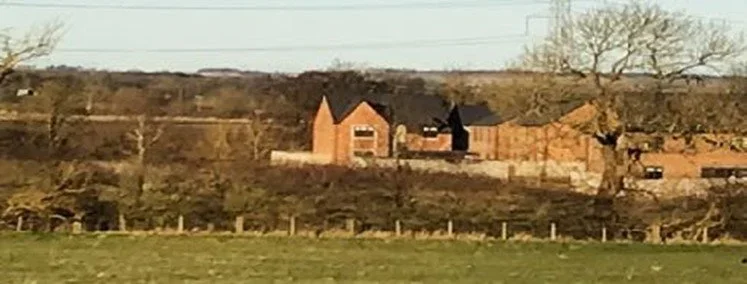
Battle lines are drawn, and the exchange of slogans has begun. For Labour it’s “builders not blockers”, the Conservatives reply with “protect our greenbelt”. But will this binary debate really lead to a sensible balance between the complex demands of housing, farming, green spaces, and economic growth?
The idea of greenbelts originated with the 19th century social reformer Octavia Hill, who also co-founded the National Trust. A great advocate of social housing, she was motivated by a deep concern for the people working in those dark satanic mills, so recently exiled from England’s green and pleasant land. The idea was taken up in the 1930s to limit urban sprawl and fragmentation of green space due to ribbon development along London’s main transport routes. There are now fourteen greenbelts in England including substantial areas around Newcastle-Gateshead.
The term “greybelt” was coined by Keir Starmer to describe areas of poor-quality land within notional greenbelt boundaries but lacking significant agricultural or amenity value. Actual examples included a petrol station forecourt and a disused car park. Brownfield land is disused, contaminated urban land which needs specialist treatment before it can be developed.
People are naturally very protective of greenbelts, especially if they are fortunate enough to live in or close to them, so it is right to build houses on brownfield or greybelt land wherever possible. There is, however, a real housing crisis, and home ownership or even affordable rent has become an impossible dream for many. Housebuilders and politicians have identified planning red tape as the main obstacle to solving this crisis. How can these competing demands be balanced?
Environmentalist Tony Juniper, chair of Natural England, suggests that "The green belt should not be sacrosanct. England could end up with less greenbelt than it has currently, but better quality......quite a lot [of greenbelts] are pretty bereft of wildlife and not very accessible. Some of them are not producing much food either.”
Contrary to Conservative claims, there are no “Labour plans to build on Ponteland’s greenbelt”, but there is an urgent need for more homes. With a different style of politics could communities agree how to meet this need with carbon neutral housing designed actually to improve the environment, biodiversity and access to green space?
Bob Turner
People Power 2:
We saved station ticket offices
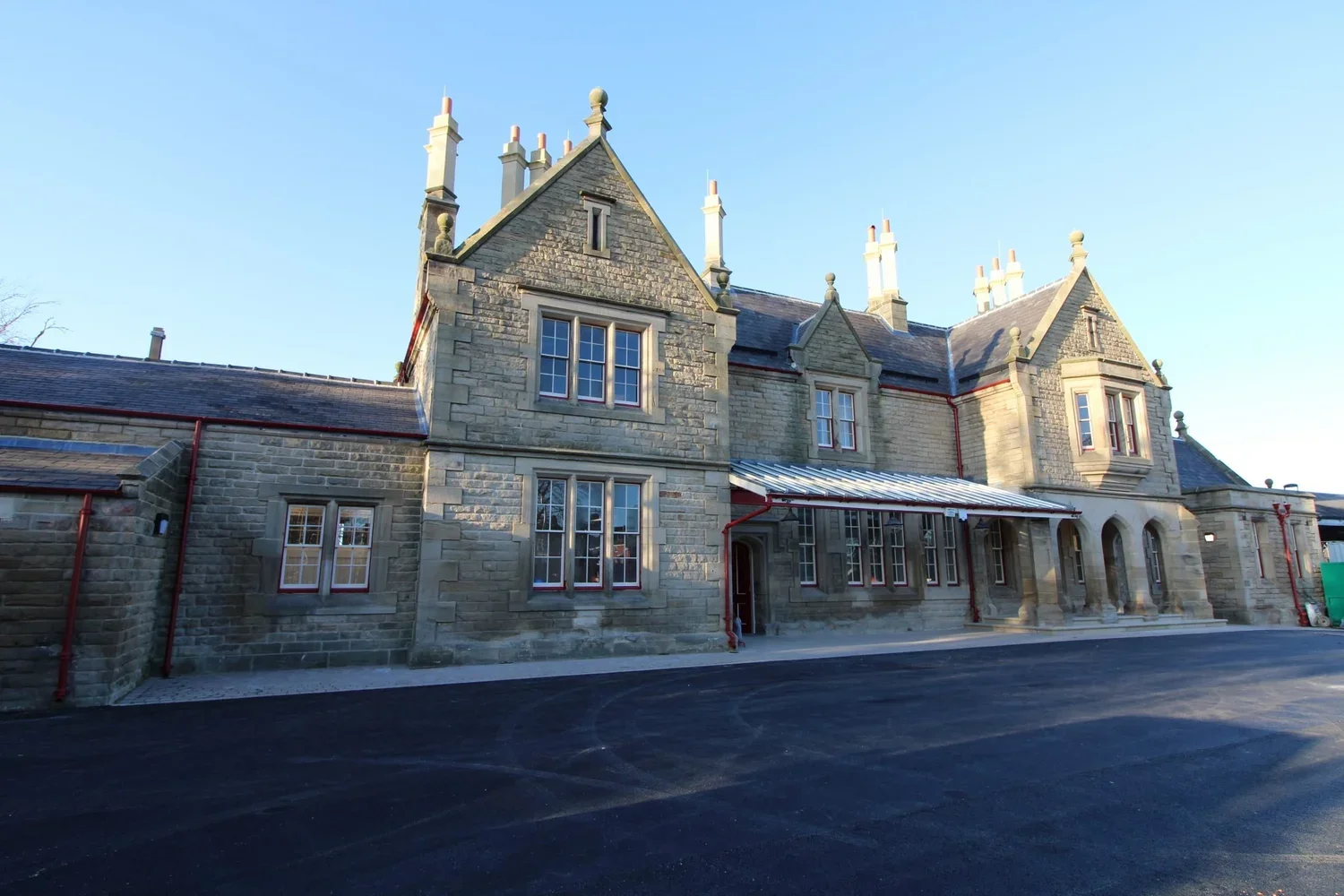
In late October 2023 the Rail Delivery Group (RDG) withdrew their threat to close every rail ticket-office in England. In so doing they resolved another area of dispute with the Rail , Maritime and Transport Union (RMT), but also with the quarter of a million people who responded to the public consultation exercise to protest against their plans.
In August 2022 at the first whiff of the threat to ticket-offices, members of the Morpeth and Pegswood Labour party began talking to travellers at Morpeth railway station to alert them and outline possible means of complaint. Once the RDG made their intentions official in July 2023 the local RMT branch mounted their own campaign helped by local Labour members. With the support of many Morpeth shops and businesses protest-cards were made available to be submitted as part of the public-consultation.
Cynics may point to an imminent General Election as a likely reason for the reversal of these plans by RDG. However, the Squirrel believes several features of this dispute-period are reasons for optimism.
Firstly , the RMT were able to remain solid in their resolve throughout a protracted period despite the attempts to undermine them. Their leaders Mick Lynch and Eddie Dempsey were effective media performers, regularly frustrating interviewers with their composure, wit and sound grasp of all the issues - thereby challenging the stereotype of the 1970's tub-thumping " Union Baron ".
Secondly, public support for the RMT position was strong from the outset and remained so throughout the eighteen months, confounding the efforts of the government and media propaganda machine to denigrate them.
Finally and perhaps most importantly, the threat to ticket-offices united the public and trade union in presenting a concerted opposition to the RDG proposals in a way rarely seen in recent industrial relations.
It’s encouraging that people, of whatever political stripe, are prepared to protest when something they value is under threat . We are told that people no longer care about politics or democracy, but clearly it is still possible to successfully resist and protest, both formally through sustained official strike action, and informally through mobilising public opinion into an effective campaign. Paul Thompson
People Power 1:
We Saved Druridge Bay
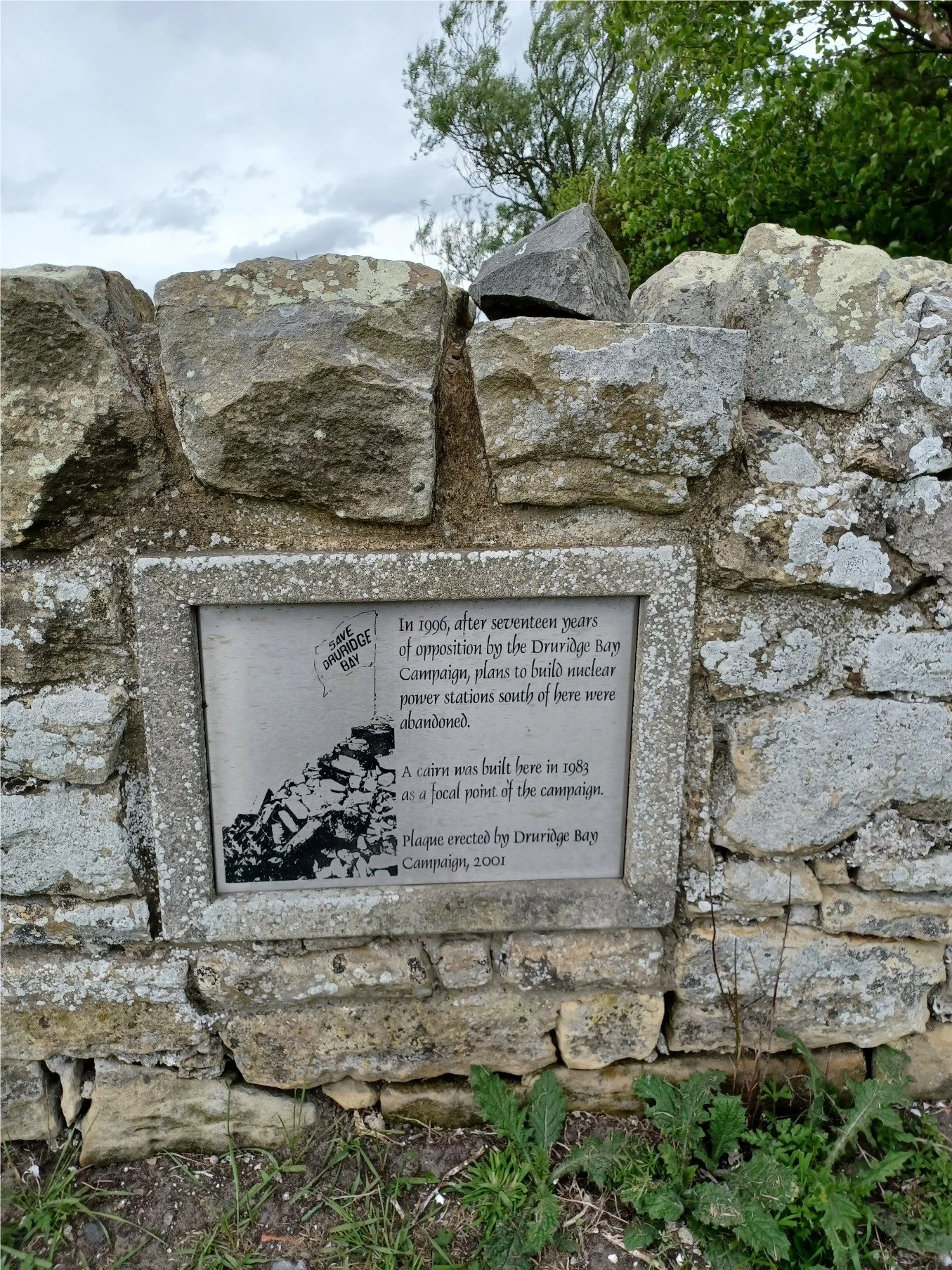
On 9 November 2023 I was in Druridge Bay with my daughter, looking north from the height of the dunes at Cresswell. The sun shone brightly, picking out the white of the wind turbines near Widdrington. We commented to each other that if it hadn't been for the Druridge Bay Campaign we could have been looking out over the dome and buildings of nuclear power stations. Our decade-long campaign reached its climax on 9 November 1989, memorable because it was also the day of the collapse of the Berlin Wall. On that day, the government finally announced that they would halt the nuclear programme, albeit temporarily, and Druridge Bay was no longer under threat.
Hooray, and time for celebrations. Soon after that, Druridge Bay Campaigners agreed that the next steps were (a) to get back the land which the Central Electricity Generating Board had purchased and drilled for up to three nuclear power stations, and (b) to stop RMC (Ready Mixed Concrete) from shovelling up lorry-loads of sand from the beach and taking it away. We succeeded. In December 1996, we had a double celebration – Hooray again.
Children and families enjoying the wonderful curving beach these days may not realise what might have happened, although a sneaky bit of sand extraction still seems to take place. There are two tiny plaques, one on the bridge over Blakemoor Burn and another on a wall near the entrance to the National Trust site. They are all that remain of our dynamic environmental campaigns. We were the people who saved Druridge Bay.
Bridget Gubbins (guest contributor)
Having worked for the Druridge Bay Campaign, Bridget wrote two books which tell the stories, Generating Pressure, 1991, and Power at Bay, 1997, Earthright Publications. They are out of print but available in local libraries and through second-hand outlets.
Northumberland’s Gathering
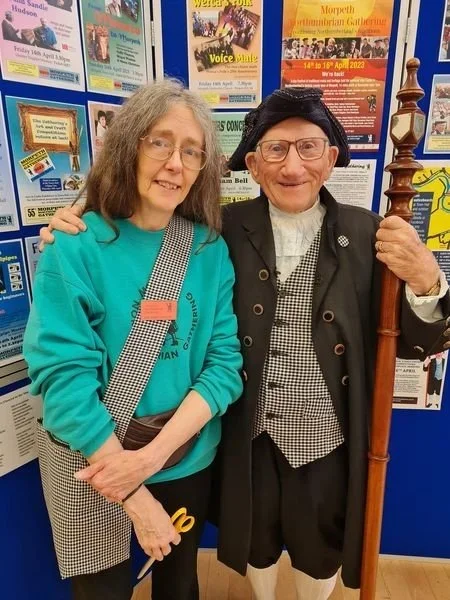
Kim Bibby-Wilson with the Morpeth Gadgy, Alex Swailes MBE (photo by Alison Byard)
What would you say is the importance of the Morpeth Gathering? Can you say something about its history and background?
Where do I start on its importance? The full title is Morpeth Northumbrian Gathering; the strapline is “continuing Northumberland’s traditions” and that is exactly the Gathering’s mission, showcasing the area’s music, dance, crafts, folklore, dialects and customs. UNESCO defines these skills and knowledge, passed on by through the generations as “intangible cultural heritage”, such an important part of people’s diverse lives. We need to remind people or tell them for the first time that Northumberland has a huge and rich heritage including pitmen’s rapper sword dancing, our own ancient bagpipes, and local words and sounds found in our songs and everyday speech that are direct echoes of the Old English language of the Angles. Our sense of place, identity and continuity is celebrated through all the concerts, outdoor events, displays, competitions, storytelling, hands-on workshops encouraging people to spectate, enjoy, learn and participate. In the process we aim to host a really enjoyable three-day programme for all ages in the county town of Morpeth.
The first festival was held in the spring of 1968 by Morpeth Antiquarian Society as a one-day traditional music festival of song, melody and dance, to complement the society’s usual local history lectures and visits. It was run (as it still is) by a standing committee of co-ordinators and representatives of the different activities, with my father chairing the committee as he was at the time the MAS chairman. The whole family became involved, with my mother selling tickets through her woolshop and my brother and me taking part in the musical and admin areas. Over the years the event grew into a three-day tourist attraction held on the weekend after Easter with the addition of craft, dialect, drama, heritage and other artforms and an increasing amount of free outdoor spectacle, thanks to helpful levels of regional arts funding. More recently challenges from funding cuts, risk factors, reduced and in some cases ageing manpower - and of course the interruption of Covid - make it much harder to pull off a full programme of events, though after cancelling the in-person events just before lockdown, we rapidly learned how to produce pre-recorded and live online events during the pandemic. This had the added advantage of reaching appreciative people across the world who had never managed to visit our live festivals.
Do you fear for some of the Gathering's traditions in the future?
Traditions do evolve – for instance, we’ve had a modern mummers’ play with topical references, a rap performance of Chaucer and some digital music in past Gatherings – so we always look for ways to continue elements in a way that appeals to new audiences and increases active take-up. We weren’t sure whether 2023 would see people returning to in-person events after the pandemic break. Like you, we were disappointed, if not alarmed, to find that despite other competitions seemingly unaffected, no clog dance entrants turned up, the first time that had occurred. The stewards and judges who ran the taster clog workshops were keen to explore running regular public workshops for novices of different ages, something we couldn’t manage last year. A recent clog project by Music Partnership North in local schools is making good progress but the youngsters are not yet up to competition standard. Another factor is the small number of clog makers nowadays, with none based in the NE for many years. At the time of writing we are discussing whether to pause the clog competitions until 2025.
It’s true that not everyone enjoys or approves of competition in the arts, but it’s a central aspect of many of the traditional musical festivals in the UK and the progressive nature of novice/intermediate/open classes can act as an incentive. Other areas have lost support or fallen out of fashion over our 56 years – a lack of suitable rams’ horns affected stick dressers, schools are hard-pressed to spare time to encourage skills not in the core curriculum, and we’ve had no junior dialect writers or piano accordionists come forward recently. When it’s practical we’ve run satellite events to encourage participation.
On the other hand, two members of Morpeth Poetry Group, Eileen Beers, and George Robertson, won categories in last year's dialect competitions. Eileen is a long-standing dialect practitioner, but George is a relative newcomer to dialect poetry, although not, of course, to Northumberland. Does this combination of continuity and replenishment, exemplified by Eileen and George, put you in good heart for the future?
It certainly does – we need talented exponents of the skills we highlight along with enthusiastic newcomers of all ages to show audiences what is special about Northumberland’s traditional life. Look at the PR machines of Scotland and Ireland – we need to flag up Northumberland’s uniqueness to get the same level of public understanding of our own distinctive culture. Despite increasing challenges (there’s always scope for more active volunteers as well as support with funding events) we always receive brilliant feedback about the Gathering, with artists asking to come back or bringing forward new ideas, and audiences snapping up tickets for the main concerts (the next fundraiser with a superstar line up including Alistair Anderson, Werca’s Folk and Graham Bell is on 8 March).
Special events at the 2023 Gathering include Fairies and Folk Tales plus More Silly Songs. Full details on http://www.northumbriana.org.uk
Greg Freeman
Cycleroute to Nowhere?
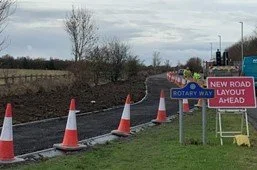
In 2023 Northumberland County Council (NCC) approved plans for three new cycling and walking routes in Ponteland, Ashington and Blyth, hoping to: ’create stronger and greener links between towns for work, education and leisure purposes’.
The Ponteland route was jointly funded by NCC, the Transforming Cities Fund and the Active Travel Fund to the tune of £866,000. A further £500,000 was provided by Transport North East earlier this year to complete the scheme which creates a cycle route from Callerton Lane to Prestwick Road End roundabout, much of it along an existing bridleway.
The project has, however, met with a mixed reaction from residents. Concerns have been expressed about the cost of the scheme; a lack of meaningful consultation; the destruction of a wildlife corridor and the removal of native trees, bulbs and wildflowers planted by volunteers from Ponteland Community Partnership. Others have suggested that £1.38 million could have been better spent on repairing potholes or on measures to prevent flooding of surrounding roads. There are worries that the project is a precursor to housing development on the surrounding fields. Although the scheme aims to connect Ponteland by cycle with Callerton Parkway Metro station, the onward journey from the Prestwick Road roundabout is along busy roads.
Ponteland and Darras Hall has 10,000 residents. Public transport is poor. There are currently only three bus routes - to Hexham, to Newcastle, and a new one (Route 777) which provides a connection to Morpeth. The nearest metro connection is at the airport - over an hour’s walk from some parts of Darras Hall - though the 777 now includes this connection.
In 2022, 1.98 billion vehicle miles were travelled on roads in Northumberland (https://roadtraffic.dft.gov.uk/local-authorities/102). It clearly makes sense to try to reduce car use in Ponteland, and in Northumberland more widely, but is the Council going the right way about it? Let us know what you think at heddonandpontzine@gmail.com
Michael Clarke
Know your limits: the boundaries are changing

Image credit: Josh and Kaldari, CC BY 3.0 <https://creativecommons.org/licenses/by/3.0>, via Wikimedia Commons
You may have heard that there is a general election just around the corner (note: published in CS14 April 2024). Do you plan to vote? Well, there are some important changes that may affect you.
The squirrel has written before about the new requirement to show proof of identity when you turn up to vote (CS11). Now we need to examine another change that is arguably more important and probably less well known. Constituency boundaries across Northumberland are changing.
If you live in Morpeth or Pegswood and expect to vote in the Wansbeck constituency then you may be surprised to learn that you are actually now in the North Northumberland (ie. Berwick) constituency. But it’s not quite that simple because if you live in Longhorsley or Hepscott then you are now part of Hexham constituency. If you live in Heddon or Ponteland and you have given up on voting because the seat has always returned a Tory, then now is the time to think again because the boundary changes have also brought Throckley and Callerton into the constituency.
The North East region as a whole loses two members of parliament as a result of the boundary changes. We can safely assume that one of these losses is on our doorstep because Ashington and Blyth are now combined in a single constituency. Northumberland will now return MPs for four constituencies: Berwick (including Morpeth & Alnwick), Hexham (including Ponteland & Throckley), Ashington & Blyth, and Cramlington & Killingworth. Each of these is reckoned to have an electoral role of around 75,000 voters.
At a time when trust in our political process is fragile at best, there is bound to be some suspicion that seats have been gerrymandered. Let’s not forget that Morpeth was once a ‘rotten borough’ that returned two MPs largely at the whim of the Earl of Carlisle.
However, the boundary changes have been proposed by the Electoral Commission which proclaims its independence from government and parliament. They tell us that the 650 constituencies in the UK parliament have been remodelled to maintain a variation of not more than 5% in the number of voters within each. It seems to me that there is still ample scope to fiddle around with boundaries, but you will have to make up your own mind on that issue.
Anyway, it is what it is, and you may now find yourself no longer voting for (or against) the MP you are accustomed to dealing with.
You can find a map showing the new boundaries at https://boundarycommissionforengland.independent.gov.uk/interactive-map/.
John Gowing (no relation to the Earl of Carlisle)
Results for UK general election on 4 July 2024 - by constituency
Blyth & Ashington: won by Ian Lavery (Labour) with a majority of 9,173 (22.7%) on a turnout of 52.7%.
Cramlington & Killingworth: won by Emma Foody (Labour) with a majority of 12,820 (28.2%) on a turnout of 59.6%.
Hexham: won by Joe Morris (Labour) with a majority of 3,713 (7.2%) on a turnout of 67.8%.
North Northumberland: won by David Smith (Labour) with a majority of 5,067 (10.4%) on a turnout of 65.8%.
Social Clubs: An Institution

I’m a member of Ponteland Social Club which is affiliated to the Club and Institute Union (CIU). I enjoy a pint (£3.50) alongside men and women from a range of backgrounds and ages. I can enjoy a game of darts or pool, pop in for a coffee and, as a CIU member, I can visit any other Social Club across the country. In the 1970s there were over four thousand CIU clubs in the UK with four million members, but now the number of clubs has dropped to around 1600.
The Working Men’s CIU was founded in 1862 by the Rev Henry Solly, a social reformer and temperance campaigner. Solly envisioned clubs as healthy alternatives to the pub and as sites of mutual aid and education. Member responsibility was encouraged, and soon members controlled the clubs and took over the CIU from its founding patrons. Within three years clubs had established the right to sell beer.
Although the CIU is not affiliated to any political tradition, radical clubs emerged in London and elsewhere with many Labour and Liberal clubs. The CIU established democratic rules for running clubs and for representation on CIU committees. Education and training were provided for people undertaking these roles and many holding them went on to wider political careers: by 1922, clubmen accounted for 178 MPs, 474 county councillors, 1497 town councillors, 1242 district councillors, and 1030 magistrates.
Social clubs were (and are) non-profit organizations and soon began to invest in improved facilities and community activities. They became hubs of working-class culture and nurseries for a generation of comedians and entertainers who would become fixtures on our TV screens. By the 1970s social clubs were providing packed venues for international artists. So why the steady decline since?
The communities that had been the bedrock of club membership were suffering the effects of deindustrialisation. As working conditions, welfare, and public services eroded, the thick bonds of friendship that extended from workplaces to communities to clubs eroded too. Alongside this, entertainment consisting of lunchtime strippers and Bernard Manning style comedy failed to keep up with changing cultural tastes. It wasn’t until 2007 that the CIU dropped ‘Working Men’s’ from its title and women were able to become full and active members. (At Ponteland Club both the Club Committee Chair and the Club Steward/Manager are women).
Over the last twelve years, the need for community-owned spaces has increased. As libraries, youth clubs, and community centres are closing, as the price of an average pint in the pub is hurtling through £6, and as people worry about how to stay warm this winter it would be good to see more people discover the friendship and hospitality offered by Social Clubs.
Jamie Thompson
Happy Birthday - or RIP?
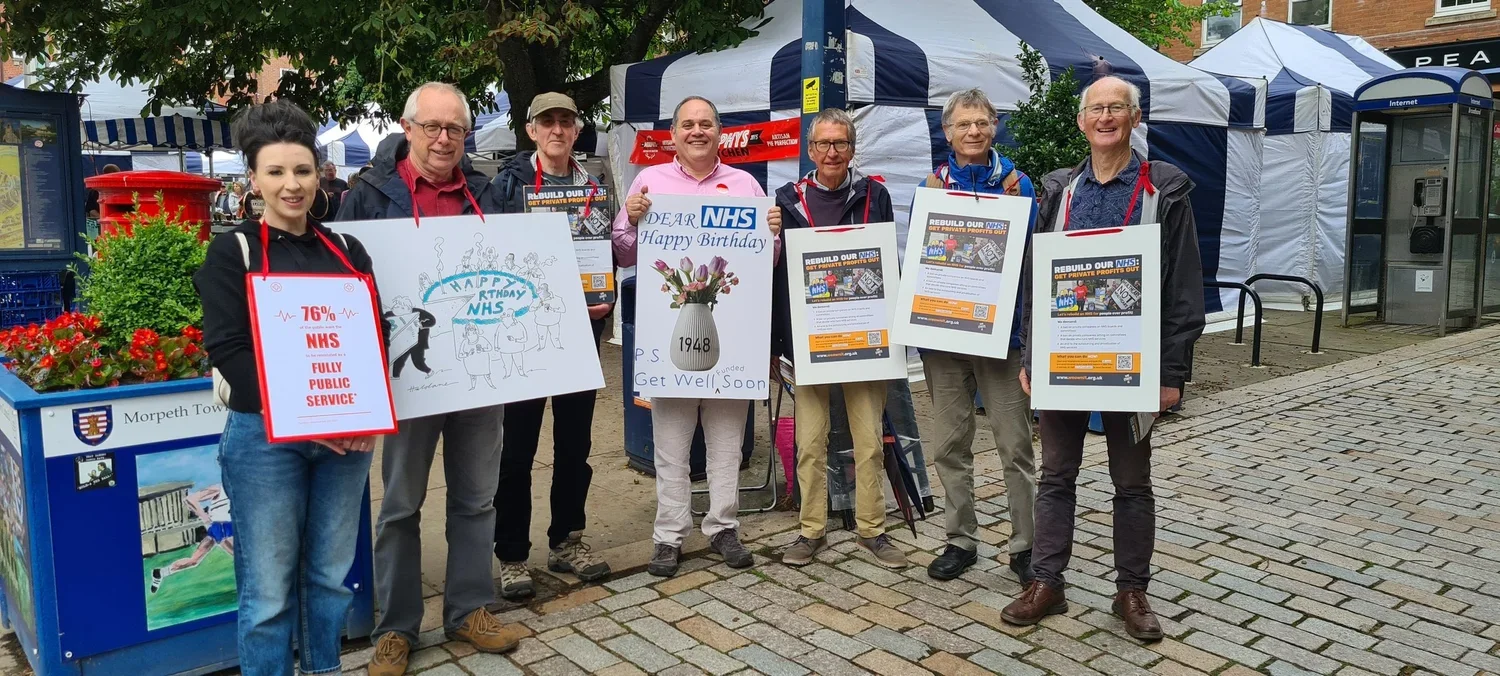
My grandfather, Nat, had looked after us all our lives, always being willing to help whenever we needed him. So it came as a great shock when, as he reached his seventy-fifth birthday and I turned to him once more, he told me he could no longer help and that I would have to look elsewhere and pay for assistance instead.
"But why didn't you warn me that this was going to happen", I asked, "instead of springing it upon me when I need you most? "
"I thought you might have noticed", he replied, "I've been getting weaker and more frail for years and now I'm exhausted. You all take me for granted, your aunty Teresa and uncles David and Boris haven't fed me properly and now I have hardly anything left to give".
This is an experience we may all become increasingly familiar with in the months and years to come. The Newcastle Journal on 6 June 2023 revealed that “Central funding for the NHS in the North East and North Cumbria fell by £100 million over the last two years and a further £60 million is set for next year" and "NHS England have outlined a requirement for each ICB (our local Integrated Care Board covers the above region) to reduce their running costs by 30% by 2025/6".
This is likely to lead to more restrictions in services provided by surgeries and hospitals, further staff-shortages and even longer waiting-lists (examples of measures Professor Allyson Pollock Public Health Professor at Newcastle University has described as “conscious cruelty"), resulting in more patients turning in desperation to the ever-burgeoning private health sector.
As the NHS reaches 75 years of age in July 2023 we might remember that its founder Nye Bevan is reputed to have said in 1948: "the NHS will last as long as there are folk with faith to fight for it".
The Squirrel asks - could we celebrate its birthday by showing our faith and supporting campaign-groups such as Keep Our NHS Public North-East ( www.konpnortheast ) in the fight?
Paul Thompson
Bronze Age Ponteland
©Archaeological Research Services Ltd
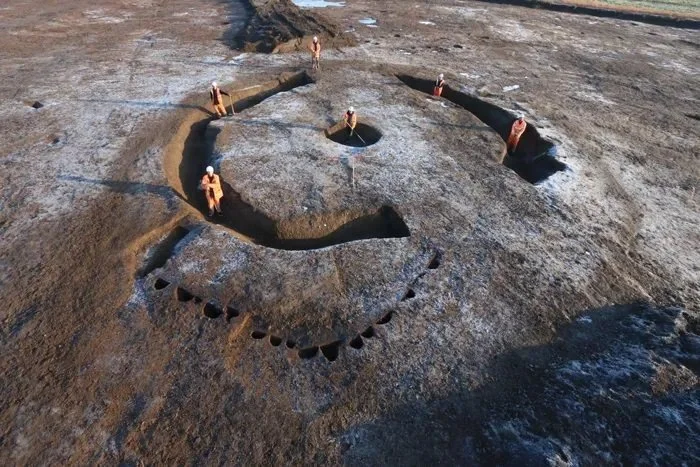
A fascinating picture of Ponteland reaching back 4000 years has emerged from accounts of archaeological excavations undertaken in 2019 prior to the building of the new schools and leisure complex. This uncovered six burials and the remains of structures including an early Bronze Age ring-ditch. Fragments of knives, daggers, household goods and charred wheat and barley grains suggest a long ago settled agricultural community. All this was deep enough to have escaped the years of ploughing from mediaeval times onwards – and a modern electricity cable!
A post and wall-slot structure was radiocarbon dated to 3947-3715 BC. A pit containing fragments from a Beaker vessel dated to 2398-2146 BC shows that people from Europe had travelled here by then. The earliest skeletal remains were placed in an oval burial pit which contained of a female of about 15 years of age who died between 2026-1896 BC, with a second burial in the form of a cremated adult laid over the first burial’s feet. Remains of a child around nine years of age dating to 1869-1621 BC was also found in the grave.
Multi-isotope and DNA analyses are in process on the skeletal remains to discover the origins and ancestry of the individuals. There was also evidence of a later phase of farming livestock up to around 1000 BC. Amazing to imagine our ancestors living and working here long before the Romans and the building of Hadrian’s Wall.
We might wonder what legacy our present-day pattern of living might leave if there was an archaeological dig 4000 years from now. How would we be remembered and understood? Perhaps more by plastic waste than ceramic beakers? By then climate change will have had a significant impact on the planet. Will people still be living in this area?
We owe it to those buried here long ago, and to future generations, to take care of the resources of our community and our world.
Christine Brown
Want to know more? Go to: https://archaeology.co.uk/articles/features/pontelands-prehistoric-past.htm
What a waste!
Ian Dury wasn't singing about surplus food but his song-title could well be a cry of despair at the modern attitude towards what we grow, sell, cook and devour.
Are most people aware of the profligacy at every stage of production and consumption, and do they fully comprehend the scale of it?
- a third of all food grown world-wide discarded;
- food-waste a major contributor to climate-breakdown, emitting nearly as much greenhouse gases as the two biggest offenders: the US and China;
- UK wasting 12 million tonnes of food a year, at a cost of £20 billion.
"Something must be done" we cry, wringing our hands as we frantically grow our own and rant at global food systems and supermarket strangleholds. Well, there are grounds for hope and indeed something is being done, and it’s on our doorstep.
BIND is a community initiative company based in Newcastle which, through a three-pronged approach, aims to reduce food-waste while changing associated public attitudes and behaviour.
The figures quoted above are taken from their website (projectbind.com) where can also be found details of their impressive programme.
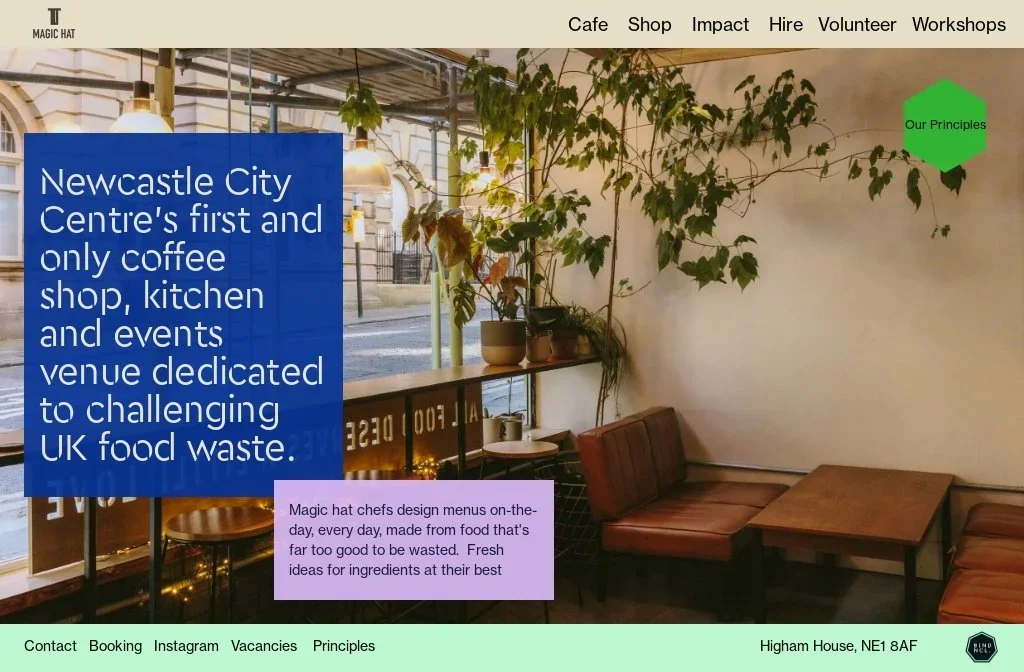
Firstly, they intercept surplus food from farms and supermarkets which is then served to the public as meals in their flag-ship project the Magic Hat cafe, where staff earn the Living Wage and there are no zero-hours contracts. At weekends they operate a Pay as you Feel arrangement - asking diners to place a value on food others consider of no value.
Secondly, their work with primary schools throughout the city comprises creative initiatives including helping children understand how food-waste occurs and how to reduce and prevent it.
Thirdly, they assist businesses from the private, public and third sectors in assessing their current practice and adjusting it to be less wasteful of food. An online ' signposting tool ' just recently devised makes this scheme easily accessible for firms and individuals.
So, as the late cockney wordsmith also sang:
Reasons to be cheerful!
Paul Thompson
I, Daniel Blake - revisited
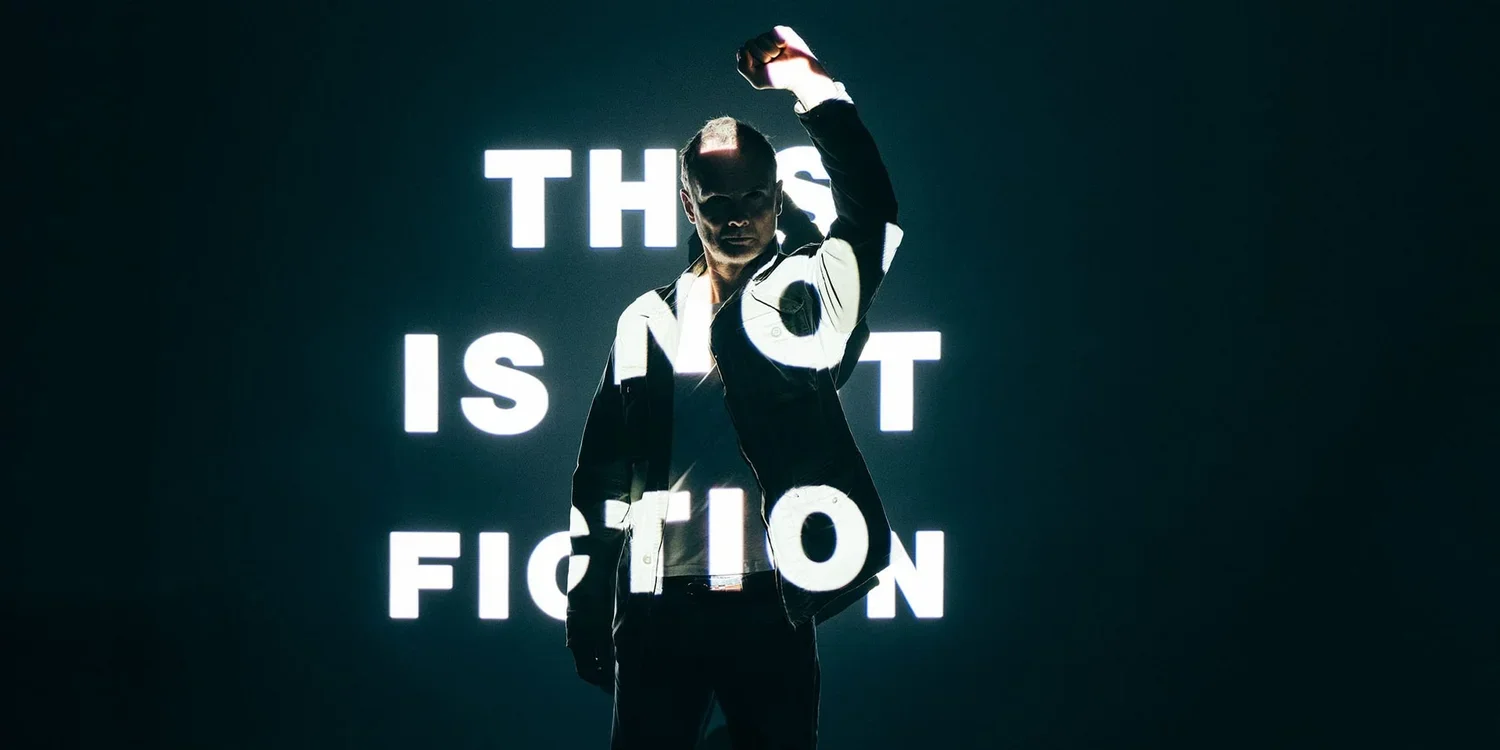
In 2016 the powerful Ken Loach film “I, Daniel Blake” shone a spotlight on the stark reality of how the benefit system can fail those it was created to protect and serve. Could happen to any of us. At the centre of the story are the Geordie Daniel, a 59 year old widowed skilled carpenter no longer able to work following a heart attack, and Katie, a homeless single mother relocated from London to the North East. They both know despair and hunger as they struggle with bureaucracy, inflexibility and inhumanity – as Daniel puts it "I am not a blip on a computer screen or a national insurance number, I am a man."
7 Years on, actor Dave Johns, who portrayed Blake, has adapted the story for the stage; it premiered in Newcastle at Northern Stage 25th May to 10th June. The production featured factual interviews, speeches and social media output showing the impact of government decisions on real people’s lives. https://northernstage.co.uk/whats-on/i-daniel-blake/
Has anything changed in the years in between? Dave Johns says that in researching his new version of the story he found its portrait of poverty more relevant than ever as the UK’s years of austerity and the cost-of-living crisis are making it even harder for those who are already struggling.
With an estimated 14.5 million people now living in poverty in the UK, this is not fiction. It is reality.
Many are still faced with a dysfunctional benefits system. Foodbanks were originally intended to fill the gap whilst people waited for benefits to start. Now even those in jobs rely on them to feed their families. A recent report highlighted again child poverty in the North COTN-APPG.pdf (thenhsa.co.uk)
How to respond? Daniel and Katie show the strength to be had in supporting each other, and in making their voices heard to try to reshape the system. Can we play our part in both ways, and try to make a difference in our local community and in our national politics?
Christine Brown
Fish and Chips
Ponteland has its Fish and Chip shop again after some weeks of refurbishment – now with indoor seating.
One of our great British food traditions – but we owe it all to French, Spanish, Portuguese and Eastern European refugees who have settled here.
In the 16th century, Spanish and Portuguese Jews facing persecution came to England. Their Pescado Frito – white fish coated in flour and fried so it could be eaten cold on the Sabbath – became popular as street food. And the chips? French and Belgians dispute who first had the genius idea to fry potatoes (brought to Europe from Peru) but it was probably the French Protestant Huguenots, in their turn fleeing persecution in the 17th century, who introduced this to the English.
Putting the two together came around 1860. Joseph Malin is credited with opening the first fish and chip shop in London’s East End. He was one of around 140,000 Jews who came to Britain escaping the pogroms in Eastern Europe and Russia. Of course it didn’t stop there. Whether your favourite is curry, pizza, rice and beans or a late night kebab, our cuisine has been enhanced by waves of people who have come here to live. Uniquely British new dishes have been created – Balti in Birmingham, and the national favourite Chicken Tikka Masala which was improvised by a Bengali chef in Glasgow.
Italian ice cream for afters perhaps? Food brings people together. The new Ken Loach film The Old Oak is set in a former mining community in Durham, when Syrian refugees are brought to live there. The local pub is struggling, the one public place left after everything has closed in the town. The same pub which had been the centre for feeding families in the difficult days of the 1980s miners strike. Do see the film to find out what unfolds….
As we welcome those who today need to seek safety and new beginnings, who knows what food traditions we may come to enjoy?
Christine Brown
People Power Prevails on Privatisation
Local people added their weight to a national campaign aimed at preventing further privatisation within the Health Service.

Most were, of course, unaware that on 1 July 2022 the NHS had again been reorganised, as the national and local mainstream media had failed to cover it.
These latest changes potentially open the door to private health companies sitting on the Board and Committees of the 42 new Integrated Care Systems (ICSs), which now constitute the NHS.
The campaign, entitled Rebuild Our NHS and mounted by ‘We Own It’ supported by ‘Keep Our NHS Public’, asked the public to express their concern by writing to the Chair of their local ICS demanding that he/she keep their decision-making bodies free from private health interference.
Members of Morpeth and Pegswood Labour Party (also KONP supporters) spoke to people on the streets of Morpeth, a few days before the 74th anniversary of the founding of the NHS, inviting them to sign a giant birthday card and,by scanning a QR code, send an email to Professor Sir Liam Donaldson, Chair of the North East and North Cumbria ICS.
This region sent more emails than any other part of the country, prompting Sir Liam to respond via the ICS website.
While ‘We Own It’ are satisfied that his response amounts to a pledge to accede to the campaign's demands, KONP are more cautious and are seeking further clarification.
Certainly the ICS are now aware that the public are scrutinising their work, thanks to local people showing they wish their NHS to remain in public hands.
Paul Thompson
Further information on the campaign can be found at: We Own It and Keep Our NHS Public
“You can't improve what you don't measure.”
… once said a management guru. Targets focus attention – so we need to ensure we focus on what is most important.
Perhaps a legacy of COVID will be to remind us of what really matters; living well, caring as communities. The North of Tyne Combined Authority (NTCA) is leading the way as the first combined authority in England to adopt a ‘wellbeing framework’ to set priorities and steer its work in Northumberland, Newcastle and North Tyneside.
NTCA say “It’s about how together, we can build a better life for everyone. A focus on what simply makes life worthwhile. Our goal is the development of the potential of all – to secure long lasting wellbeing for everyone. This Framework helps us do just that.”
So how to measure “Wellbeing”? In 2021, NTCA and Carnegie UK brought together specialists with experience in different sectors, to develop a wellbeing approach to pandemic recovery. They listened to the voices and experiences of people right across the area. They learnt from places already using the approach - New Zealand, Iceland, Scotland and Wales.

The four key outcomes are all inter-connected. This reflects a belief that wellbeing is something that must be shared: it can only be achieved when everyone has what they need to live well.
Social wellbeing – good quality homes, safe & welcoming communities, access for all to education, health & care service
Economic wellbeing – good quality jobs, fair work, all having enough money to meet needs like heating, eating and housing.
Environmental wellbeing –a good quality environment free from pollution. Businesses & communities taking responsibility for tackling the climate crisis
Democratic wellbeing – all valued & respected, human rights upheld. All have a voice in decisions affecting our communities and public services.
The Carnegie Trust (www.carnegieuktrust.org.uk) is continuing to work with NTCA and local universities to develop good measures against which to test how we are doing.
Wonder what this might look like in Heddon, Ponteland, Morpeth and Pegswood? What would make a positive difference?
“Having a voice” is part of the framework – Curious Squirrel would be interested in your views so contact us at https://www.curioussquirrel.net/contact.
Christine Brown
Colonial wars to culture wars: sensitive collections in our museums
The Great North Museum: Hancock (to use its proper name) is a valued part of our cultural landscape, but there’s always room for improvement. Adam Goldwater (Museum Manager at GNM:H) says, “the World Cultures Gallery is a bit of an embarrassment” and he is on a mission to improve it. He is a key player in an effort to ‘decolonise’ the museum, although he is not entirely comfortable with the term because of its culture wars connotations.
It is an issue facing museums across the UK (and beyond) which has its origins in the long-running campaign to repatriate the so-called ‘Elgin marbles’ from the British Museum to Greece and more recently the so-called ‘Benin bronzes’ to Nigeria. In part the issue revolves around how museums acquired their artefacts – the question of rightful ownership. But ethical concerns go beyond this to include how these artefacts are displayed and contextualised. For Adam, both are important.

GNM:H has developed a policy on repatriation of cultural property which lays out an approach to dealing with the first of these concerns. This has already led to pro-active moves to return the item shown here to Nigeria. Research by museum staff concluded that it was part of the treasure trove looted from Benin during the punitive colonial military campaign in 1897.
The history of the World Cultures collection spans over 250 years and records do not always capture how an object came into its collection, but as a first step GNM:H has prepared a 100+page inventory https://greatnorthmuseum.org.uk/collections/sensitive-collections-and-repatriation that is available on-line for public scrutiny.
As a legacy of colonialism, many communities worldwide have been physically separated from their material heritage which now exists in museums far from those communities. For indigenous peoples, aspects of history, heritage, identity and elements of culture can be embodied within such artefacts. Traditionally, museum displays have employed a clearly western approach to looking at artefacts in their collections and overlooked the objects’ significance to their source community. Decolonising GNM:H therefore poses challenges that go beyond repatriation so that displays (particularly within the World Cultures Gallery) recognise and show sensitivity to indigenous views of these artefacts. Looked at in this way, their existence should not be seen as an embarrassment but rather as an opportunity to educate museum visitors both about indigenous cultures and about the colonial experience that led to these objects ending up in a museum so far from their original home. We cannot change history but we can learn from it and GNM:H has decided to take a fresh look at its collection with input from local people who have strong cultural connections to these artefacts.
John Gowing (with thanks to Adam Goldwater)
Image credit: Brass stave with bird finial (Great North Museum: Hancock)
Coming soon to a site near you…

What goes around, comes around. So they say. And it seems to apply to nuclear power.
25 years ago the Druridge Bay Campaign was celebrating success in its long struggle to oppose plans to build a nuclear power station on the coast of Northumberland. That was shortly after the Chernobyl disaster had dumped its poison on Cumbria and the pendulum had swung against nuclear power.
In the interim, too little was done by successive governments to secure our future energy supplies and the UK became increasingly dependent on gas. Now we have a war in Ukraine and gas prices have gone through the roof. The pendulum has swung back and there is once again talk of building nuclear power stations.
The new ‘Energy Security Strategy’ (https://www.gov.uk/government/publications/british-energy-security-strategy) envisages creating a new body - Great British Nuclear - that will be tasked with delivering around a quarter of the country’s projected energy needs. To achieve this end, the aim appears to be to build eight new reactors by the end of the decade. Currently, there are eight designated nuclear sites: Hinkley, Sizewell, Heysham, Hartlepool, Bradwell, Wylfa, Oldbury and Moorside. Worryingly, the new strategy mentions developing “an overall siting strategy for the long term”. Are they coming back to Druridge?
It’s time for a better-informed debate on whether or not nuclear power offers at least part of the solution to a secure zero-carbon energy future. It would have been better to have the debate before we got into this mess, but we are where we are.
One issue is, of course, the risk of another Windscale/3-Mile-Island/Chernobyl/Fukushima type accident. Estimates of the human impact of these incidents seem to vary widely. However, it is important to contextualise this risk alongside the threat posed by the climate emergency.
Another issue is the disposal of spent nuclear fuel. The new strategy says only that the UK “applies the highest global nuclear safety standards, including for the safe long-term disposal of all nuclear waste”. But what does this mean? It has to go somewhere and it has to stay there for a very long time.
According to the UK Radioactive Waste Inventory (https://ukinventory.nda.gov.uk/) the total mass of radioactive waste in stock and estimated to be produced over the next 100-year period is around 5.1 million tonnes. When packaged, this would fill a volume around 4.5 million cubic metres, roughly the size of Wembley stadium. It requires storage above-ground for 50 to 100 years and then deep burial in a geological waste repository for 1000 years. January 2018 marked the start of the sixth attempt by UK government to identify a suitable site. They are still looking. Let’s hope they are not looking at Druridge Bay.
John Gowing
It was 2019 and Kate Thick was dry stone walling. Hard skilled work, but Kate loves being outdoors in the Northumbrian countryside and the peace to reflect in the quiet hills. This day Kate noticed again the large quantities of fallen wood lying on the land and was reminded of an earlier time in her life, living in Africa and watching in awe as local women carried loads of firewood piled high on their heads. She remembers thinking, ‘I couldn’t do that’.
Nearly four years on and Kate has established and runs the Northumberland Log Bank, a non-registered charity providing dry, seasoned logs free to those in need across rural Northumberland. A platoon of trained volunteers collects wood donated by farms and estates, takes it to one of the five Log Banks, where it is cut to size and stored until ready for use and then delivered to those who need it.
They are aiming to help up to four hundred households this coming winter and with fuel poverty set to rise as financial constraints affect more people, Kate’s team is working hard this summer to build up stocks.
Kate identified a need and saw a solution. Her energy, enthusiasm and hard work have made it happen. Kate says, ‘There’s no point in waiting for the government to sort things out. You might wait forever. What we are doing is drop in the ocean but when communities work together and support one another they can solve many of their own problems’. Thanks Kate.
Jamie Thompson


Are you in need of wood fuel due to financial constraints, poor health, advanced age or rural isolation? We can deliver dry, seasoned logs.
THERE IS NO CHARGE FOR THIS SERVICE – make a small charitable donation if you wish.
We are also looking for volunteers.
Contact: Kate Thick
Email. katethick@hotmail.com Tel. 07900963234
Second Chances
Winston Churchill, contributing to a debate in the House of Commons in 1910 said “The mood and temper of the public in regard to the treatment of crime and criminals is one of the most unfailing tests of the civilization of any country.” Currently we are failing that test.
While prison should be a punishment, most establishments are dilapidated. 1/3rd of the prison estate dates back to the Victorian era, overcrowding is running at 46% and there is a lack of purposeful activity. England has the largest prison population is Europe and it is growing. The annual cost to society and the economy of re- offending is estimated at a staggering £18.1 million. Prison, though essential for some, does not work for most.
The North East has had the highest re- offending rates in England for over a decade, clearly action is needed. The Oswin Project, whose strap line is ‘Giving second chances’ became a charity in 2014 to place a wedge in the revolving door of re- offending. We build a bridge of opportunity between prison and outside and are happy to get involved in almost anything that gives our clients, who we call Oswinners, second chances, though it must be legal!
To start an Oswinner’s journey we run a bakery and café in HMP Northumberland. The goods baked there supply our Café 16 in Newcastle Cathedral and ‘graduates’ from prison have the opportunity of a placement there or in our flourishing inside out team which decorates, maintains gardens and landscapes. Mentoring and support of Oswinners and employees alike is key to our to success.
We have calculated that for every 10 Oswinners who do not re- offend (and it is a rarity) we save the public purse, in effect you the taxpayer, £1 million. Opportunity through training, volunteering, and employment gives Oswinners confidence and self-esteem.
In a post Brexit Britain, post Covid Britain many areas need a workforce and prisoners need jobs. It is a simple equation. Could you give someone a second chance? You can also support our team through volunteering. It is time to change perceptions!
Fiona Sample
Action: It’s not what you say, it’s what you do.
17 May
Northumberland’s Climate Change Action Plan (2021-2023) is ambitious. It aims for Northumberland to lead the way nationally by being carbon neutral by 2030. The plan (which you can access at northumberland.gov.uk) is comprehensive (rating 20th out of 409 in an independent assessment – www.climateemergency.uk) with two main gaps:
- first, there is no methane reduction plan which may not be surprising in a county with powerful agricultural interests. A farmers’ working group are amongst those addressing the issue.
- second, the plan doesn’t sufficiently address adaptation. How is the county preparing for increased coastal erosion, flood and wild-fire risk, building infrastructure resilience, protecting the natural environment and strengthening emergency services?
Nevertheless, it’s an impressive plan that recognises the geographic and historic advantages that Northumberland brings to the challenge and the opportunities for the county to benefit from being at the forefront of a green recovery and a growing green economy.
Whatever they say, it’s what they do that counts – and however good the plan, it is the action that matters. Translating plans into action is going to require funding and where this is going to come from is still rather opaque - although much depends on whether commercial capital backs the green recovery.
Addressing climate change is going to impact on many aspects of our lives – housing, heating, transport, health, diet, waste, employment, education, environment etc. The challenges will be different across our various urban, rural and isolated communities. With fuel and food prices rocketing and inflation rising many of us are going to struggle to survive financially, let alone invest in insulation, heat pumps, electric vehicles and solar panels.
So we read the climate action plan (please do) and we ask questions and say what we think but what are we to do? Can we identify needs in the communities we live in? Can we identify opportunities? Can we identify risks and vulnerable people? Could we set up a power generating ‘hub’ where we live? Is a shared transport project viable? Can we identify community approved suppliers of services such as home insulation, heat pumps and solar panels? Can we campaign for council support for such schemes in our communities?
We would love to hear your thoughts and ideas at Curious Squirrel.
Jamie Thompson (Spring 2022)
Safer Transport Northumbria - a new app for your phone.
17 May
Curious Squirrel articles have highlighted the need for affordable and accessible public transport in our area. We also want travelling to be safe, and to look out for each other. Have you heard about the new way in which bus and Metro passengers can contact help, or report concerns? The new Safer Transport Northumbria app is available to download for free - for Apple devices from the Appstore, and for Android devices from Google Play. It’s a quick and easy way for passengers across Northumberland, especially those travelling on their own, to report the routes and stops that need looking in to. The app is part of a public awareness campaign called ‘It’s the End of the Line’ because it’s the end of the line when it comes to unwanted behaviours and attitudes that make people, particularly women and girls, feel unsafe why travelling around our region. It is a supported by a collaboration between Transport providers, Northumbria Police, and a number of local groups, including Victims First, Rape Crisis and Street Pastors. Using the app you can
• Report places or situations of concern – quickly and discreetly
• Access support
• Check up to date travel information - bus, Metro or train – and plan your journey
If it’s an emergency we can always dial 999, but sometimes when we’re waiting at a Metro station or sat on the top deck of the bus, we might see something that doesn’t feel right. Police and transport bosses want passengers to tell them about that, and the app has been launched to help us identify just where the areas of concern are. Poorly lit locations, broken equipment or unwanted behaviours and attitudes can all make us feel unsafe. What matters is that we don’t just sit there and ignore the fact that a someone is being harassed by a group of guys on the Metro or put up with feeling uncomfortable at a remote bus stop because the lights are out. We can flag concerns for another’s safety or for ourselves. Why not download the app and give it a try? – and spread the word. Together we can make a difference.
Christine Brown (Spring 2002)
A Mayor for our region. A New Deal for the North of Tyne
17 May
The Lindisfarne Gospels are coming to The Laing in the Autumn as part of The North of Tyne Mayor’s £2.6million Culture and Creative Programme. Jamie Driscoll was elected as our first Mayor for the North of Tyne Combined Authority (NTCA) in May 2019. Thanks to Jamie, 2022 will be a real celebration of the rich history of art and culture in the North East, from the 1900th anniversary of Hadrian’s Wall to the Pitman Paintings.
The slogan of the Artists’ Union England is ‘Industry without Art is brutality’. Art and culture enrich our emotional world and mental health, and are seen by the new Mayor as a sound investment in our collective wellbeing.
Born in Middlesborough, Jamie is a qualified engineer and one-time director of a software development company. Married with two sons, he is “black-belt” in jiu jitsu, a football enthusiast and a committed socialist. The North of Tyne Devolution Deal covers Newcastle, Northumberland and North Tyneside. It comes with £20 million per year for investment to “increase opportunities and living standards through inclusive growth and productivity improvements.” Among Jamie’s key priorities are: -
Green Industrial Revolution, including improved public transport. An £18m Green New Deal is planned to include a jobs and skills programme focused on decarbonising the economy. The Mayor’s Citizens’ Assembly on climate change has already taken place and the target set for a net-zero region by 2030. There will be no chauffeur-driven mayoral car for Jamie, it will be bike, public transport, or if really necessary, use of a shared, Nissan Leaf, pool car.
Affordable homes. The NTCA will have broad powers to acquire and promote house building. The aim is to establish Community Housing Cooperatives to build houses for long term tenancies with fair rents. Solar panels and energy efficiency will be a must.
Community Wealth Building will be adopted so that more work goes to local small / medium sized businesses. This tried and trusted approach was used in Preston and helped it win the title of “Most Improved City in the UK”. In 2004 Dominic Cummings (remember him?) cut his campaigning teeth “successfully” opposing North East England Regional Devolution. Consequently, for fifteen years, key decisions about our region were made in Westminster. Now at least we’re beginning to take back control.
Bob Turner (Spring 2022)