
Cresswell Pele Tower:
A well-kept secret on the Northumberland coast
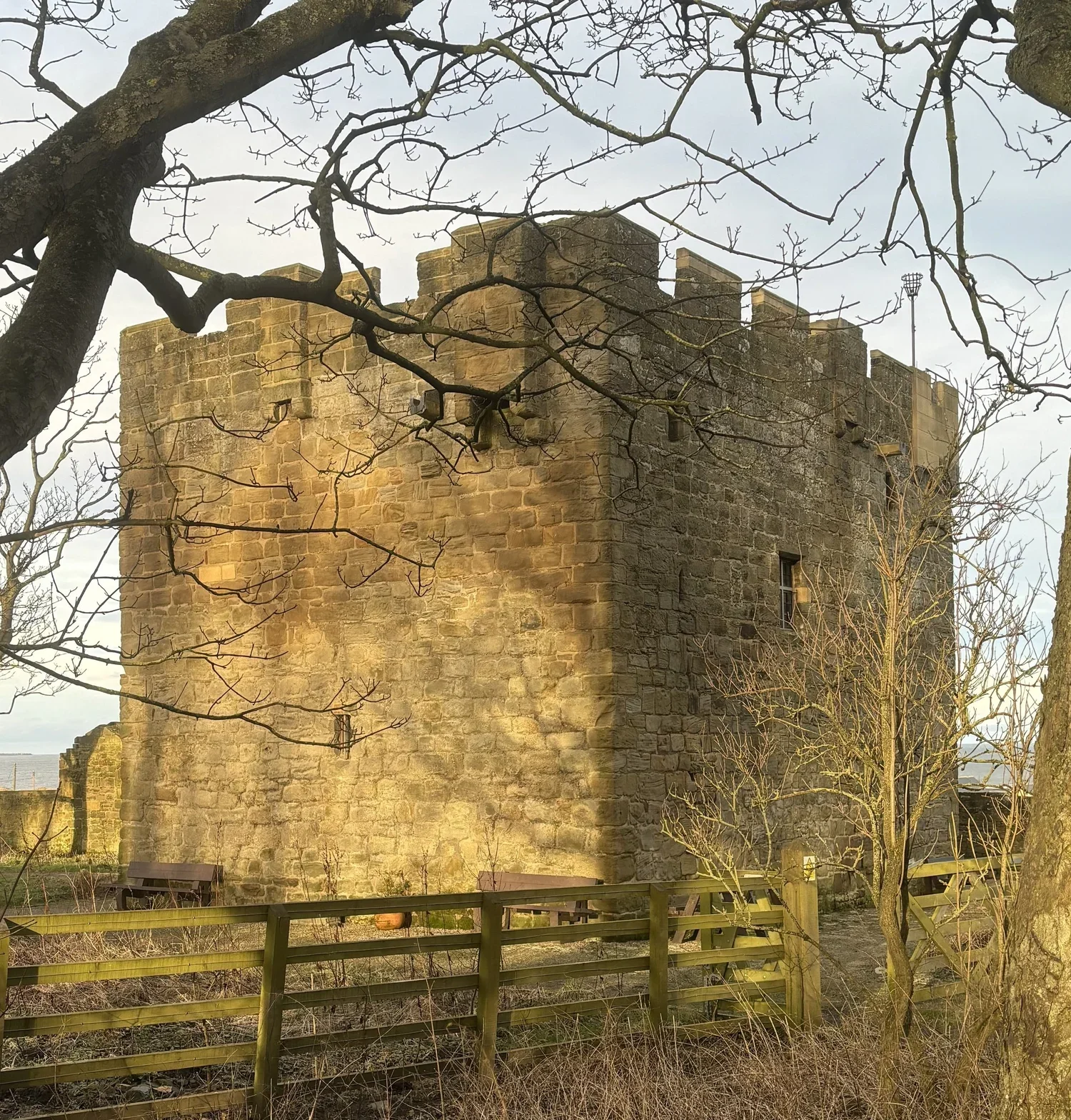
At the south end of Druridge Bay in the village of Cresswell, partly hidden in woodland, is a Pele Tower. Easily overlooked en route to the beach or the Drift Café, it has in fact stood there for over six hundred years. The site of the original home of the Cresswell family, it was still in their possession until the 1920s. The tower as seen now was added to with a fairly large mansion in the eighteenth century, then used more as a folly when that house was demolished for a more elaborate hall in the 1820s. After slowly deteriorating during the twentieth century it was restored with a substantial Heritage Lottery Fund grant in 2021 and is open on selected dates throughout Spring, Summer and Autumn.
Pele towers were built at the time of the Border Reivers when Northumberland was very much a no-man’s land between England and Scotland. Like many others, the Cresswell Pele Tower had a ground floor more given over to storage with living accommodation and a main entrance door on the first floor. In 1380, John Cresswell was captured and ransomed and it is believed the building of the Pele Tower resulted from that incident.
But the tower in the woods is not the only hidden gem. From the eighteenth century until relatively recently a series of walled kitchen gardens stretched away to the south, back towards the village of Ellington. With the growth of Cresswell’s caravan parks and private housing they gradually disappeared and now a single triangular garden of around 0.4 acres remains. This has been lovingly discovered, uncovered and recovered. It has undergone a mixed programme of restoration and development for the future, again with funding from the Heritage Lottery fund. The nurturing of this space by teams of volunteers led by Barry Mead and Steve Lowe over several years, took the garden from a willowherb dominated wilderness to its current layout of broad borders, greenhouse, gazebo, pond, raised beds, lawns and orchard.
Much more information can be found on the website https://cresswellpeletower.org.uk/ and in two booklets: Cresswell’s Curiosities and Ower the Wall; Cresswell’s lost garden from ruin to restoration.
Philip Hood
To weed or not to weed?
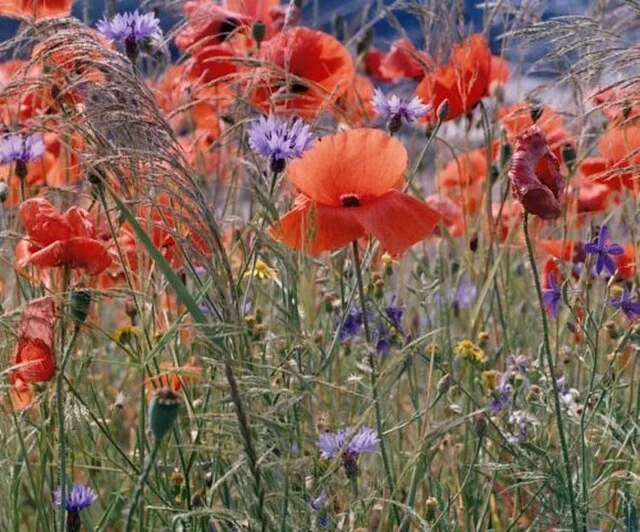
That is the question for the contemporary gardener. Is it better to welcome the plants that spring naturally from the soil, or brand them “weeds” and, armed with strimmer, trowel and herbicide, impose your will upon the piece of ground you call your own?
The traditional garden had its perfect lawn with no hint of daisies, or dandelions. The borders were sieved to a fine tilth and punctuated by lonely plants, - artificial islands of colour in a drab, brown sea, and all regularly sprayed to kill the “pests”. The new normal is no-dig, no-mow-May, no soil visible, and weeds eradicated by redefinition rather than elimination. Floral biodiversity attracts butterflies, bees, frogs, bats and birds, all doing their own thing. Some “natural plants” do call for gentle culling, but there is no need to obsess. A small patch of nettles or buttercups looks good and attracts pollinators.
You can create a wildflower meadow easily. In late autumn, remove any natural plants you really don’t want, suppress growth with cardboard for three months or so, then in the spring rake over and sow a wildflower mix that suits your soil. Importantly, include yellow rattle, a natural meadow plant that competes with grass. Cut down in late summer, - and crucially remove the cuttings to your compost heap, as meadows thrive on reduced nutrients.
Politics needs diversity too. Democracy isn’t much use if there’s only one party, and parties won’t deliver good government if they’re managed like an over-manicured lawn. Jamie Driscoll may be to the left of the current Labour Party leadership, but he has been an effective, pragmatic North of Tyne Mayor. Was it wise to weed him out of the candidate list for the new North-East Mayor?
There are, however, still some real weeds that must be rooted out. Giant hogweed is poisonous, invasive and will soon overshadow any garden and reduce it to wasteland. Any politicians spring to mind?
Bob Turner
Morpeth Library bucks the trend
T.S. Elliot is reported to have said, “The very existence of libraries affords the best evidence that we may yet have for the future of man”.
Libraries have been described as civilization’s memory banks and their existence can be traced back to Mesopotamia in the 7th century BCE. Of course, the history of public libraries in Britain doesn’t extend quite as far back into antiquity. In fact, they began to appear in the mid-19th century following the Public Libraries act of 1850. This looks like another example of what the Victorians did for us.
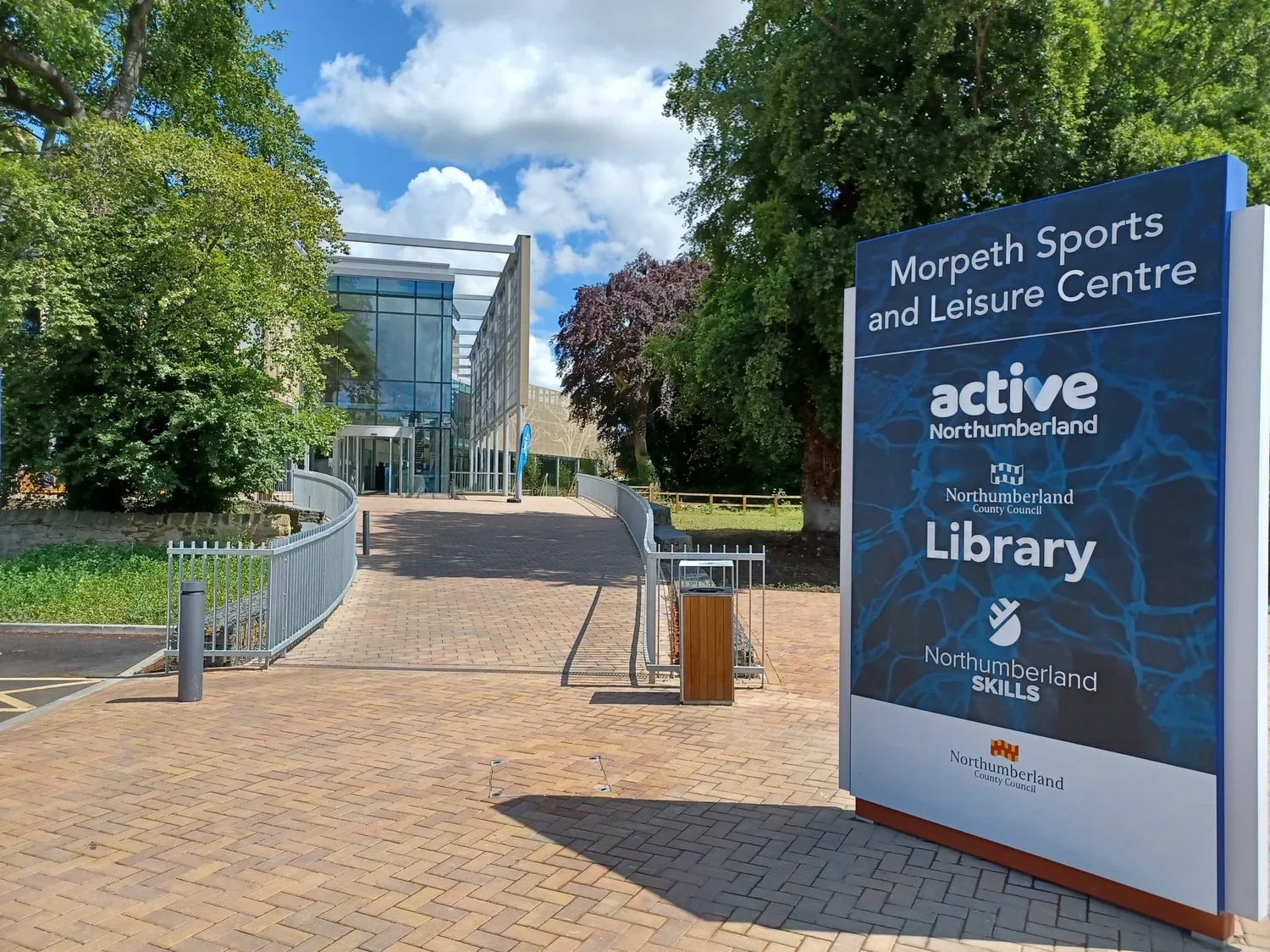
With that in mind, Curious Squirrel celebrates the opening of the new public library in Morpeth. The bringing together of a sports and leisure centre with a library is a great success. It has quickly become a valuable community hub. It’s a shame that the public toilet in the corner of the car park gone during the development, but that’s another story (see Curious Squirrel #8).
What a pity also that public libraries began to disappear across the country with the arrival of David Cameron and George Osborne in Downing Street in 2010. During the seemingly never-ending austerity years and the on-going squeeze in local authority budgets, nearly 800 public libraries have closed in England, Scotland and Wales. That represents a 20% cut to the total number.
The value of public libraries should not be underestimated[1]. As well as providing free access to books, they deliver digital literacy skills and employment skills, and contribute to building community resilience. Visits to libraries exceed the combined total of attendance at Premier League football matches, the cinema and the country’s top ten tourist attractions.
Morpeth may buck the trend when it comes to the destruction of public libraries, but we should all be aware that their closure elsewhere has disproportionately affected underprivileged children. The simplest way to make sure that we raise literate children is to teach them to read and give them access to books. Without the disposable income to buy books, many households depend on public libraries to give their children this opportunity. And the impact of inequality goes further. The shift to home-schooling during the pandemic revealed great disparities in internet access. Public libraries also provide this vital service.
So, I leave you with this thought from Alan Bennett: “Closing a public library is child abuse, really, because it hinders child development”.
[1] For an evaluation of the economic case for public libraries see ‘Libraries for living, and for living better’. This report is available to download from https://www.librariesconnected.org.uk/.
Spare: Tough being the second sibling?
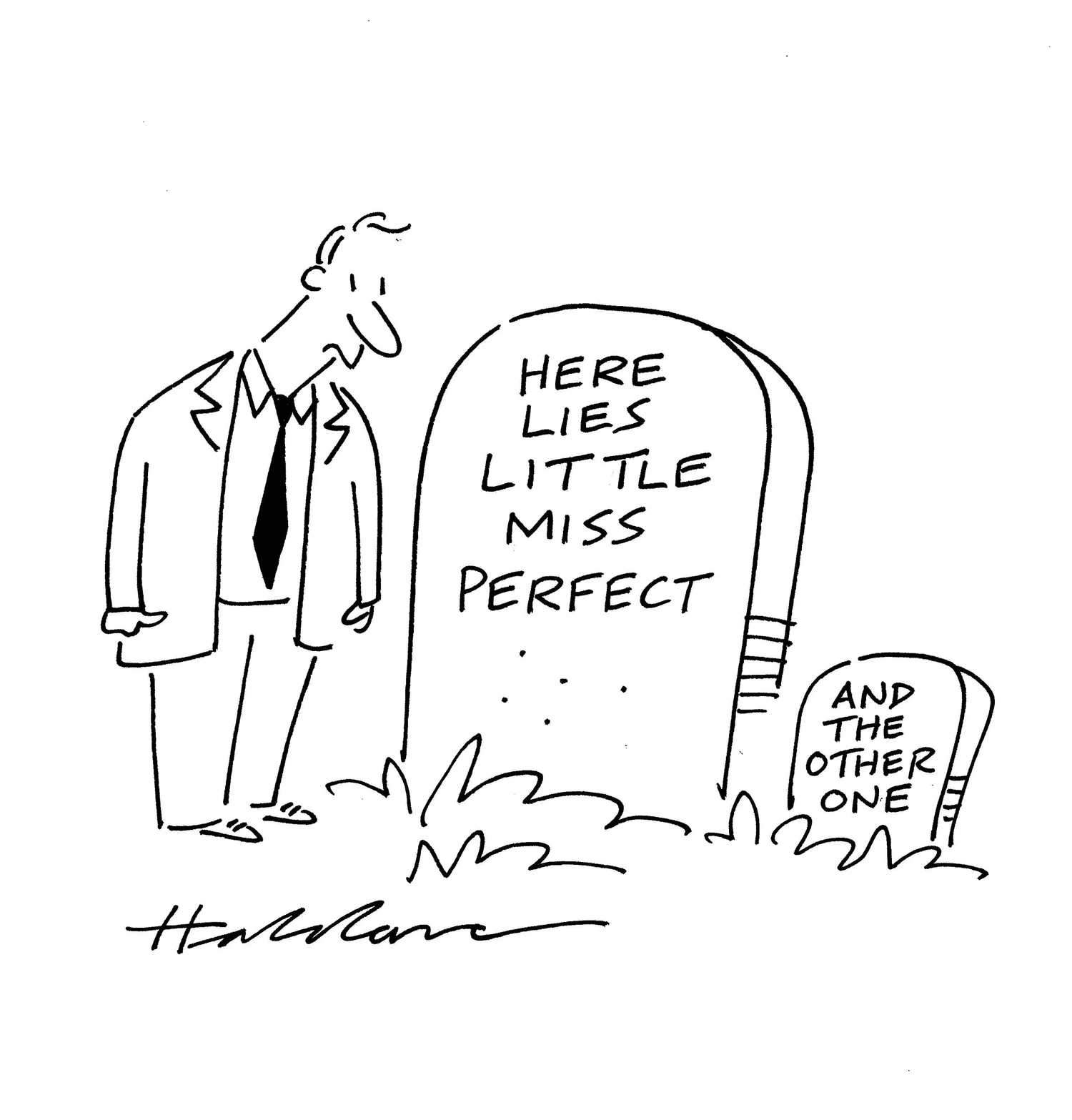
Prince Harry called his recent book “Spare”, with a focus on the position of all second sons. Expected role, likely inheritance and perceived value being secondary to the heir. There has certainly been a great deal of media comment.
Not a new phenomenon. It doesn’t only apply to the boys in a family, or to those of “higher rank”. Being second can be a hard place to find yourself in the sibling pecking order. Here in Ponteland we have an example of a young woman in the 18th Century for whom this was sadly the case.
In Ponteland Parish church there is a memorial to two sisters, daughters of the Vicar of Ponteland in the 18th century.
“Near the ashes of her father rests Anne Byne
Not more distinguished for the beauties of her person than those of her mind. She naturally applied herself to the elegant accomplishments of the polite arts, in the attainment of which she was so quick that her knowledge seemed to be acquired without time to learn it.
When a child, she had the dignity of a matron; though educated in the country, she had the elegance of a court; and an unexampled modesty which never forsook her, perfected her charms which were now incapable of addition. She was adored by her acquaintances and superior to envy.
Whilst she was approaching the summit of human perfection, Anno Domini 1741, age 18, overcome by the smallpox, this lovely virgin yielded to her fate, to rise in an inviable form.”
Rather fulsome, even for those times, we might think. And her sister?
“Near whom lies Elizabeth
Not unworthy of such a sister; she died of the same dreadful disorder in the 16th year of her age.”
The church is open daily if you want to see the memorial, and others of local note, including Sir Chaloner Ogle of Kirkley Hall, who captured a squadron of pirates off the West African coast, engineer Wililiam Weallans, business partner of Robert Stephenson, and Richard Coates, founder of our local school.
Christine Brown
Under a Hexham Moon
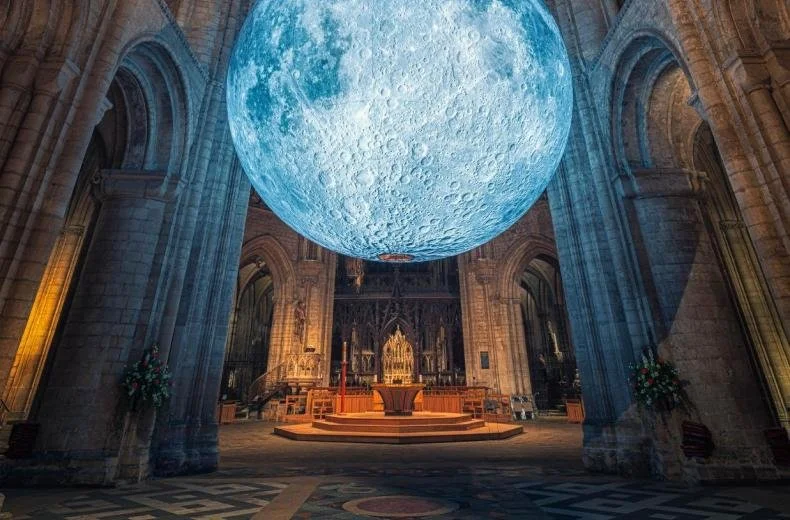
We gathered, as darkness fell, under the moon. It hung - suspended, cold and silent within the sacred space at the crossing, under the Abbey’s ancient bell tower. The Museum of the Moon, a travelling work of art, had come to visit. Seven metres in diameter, internally lit and covered with detailed NASA imagery, it brought the beauty and mystery of our gravitational dance partner to dwell a while within our place of quiet contemplation.
The choir sang simple, clear Taizé chants and we were invited to meditate on the mystery of darkness and light. So much darkness everywhere, yet it only takes one small candle to dispel the gloom, one ring of the bell to fill the silence, one kind word to reach out.
It was the feast of St Francis, who experienced so directly and vividly the utter beauty, wonder and unity of creation and how that shared experience invites us to reject the lure of false riches and live in peace as the sisters and brothers we really are.
Fifty four years ago humans first stood on the moon and looked back towards our common home. The famous Earthrise photograph helped us all realise the fragility of our planet, - tiny, suspended in sacred space. We can see the thin halo of atmosphere and the white polar caps that sustain and protect us.
By the light of our own intelligence, we can see the danger we face in advance and plot a path to survival. But the darkness of shut eyes and closed minds blocks the road. “Woke!” is used as an insult, when waking up is precisely what is needed to turn the tide of history.
Bob Turner
The Museum of the Moon, a work of art by Luke Jerram, has visited galleries, museums, churches and outdoor spaces in 30 countries. Go to my-moon.org for more information.
This Land is Our Land?
Anticipating our move to Northumberland just over a year ago, I looked forward to learning about the history and landscape of this region. Now here, I discover that there is more landscape and history than I could possibly have imagined.

Take the impending sale of the 9,500-acre Rothbury estate, which has been put on the market for the first time in 650 years by the Duke of Northumberland’s son, Lord Max Percy, for instance. Yours for £35m, or thereabouts. Reports that Queen rock legend Sir Brian May has shown interest have added to media curiosity about the news. The latest from the BBC is that four bidders are understood to have made offers.
Estate agent Knight Frank describe the land as “the single largest ringfenced carbon offsetting opportunity to come to the open market in England”, and the "largest block of land to come on the market in England in the last 30 years".
It includes 12 farms, more than 1,800 acres of woodland, fishing and shooting opportunities, 23 residential properties, a caravan park, and a pub, the Rose and Thistle in Alwinton. Part of it is within the Northumberland National Park, including the summit of Simonside itself, and the cup and ring rocks and ancient hill fort at nearby Lordenshaws.
The land has been in the Percy family for 700 years, and its sale has raised local concerns. Rothbury councillor Steven Bridgett has said England needs laws that allow the community to buy land in such circumstances. He had hoped to persuade Northumberland County Council to register the estate as a community asset, giving community groups time to raise the necessary funding, but accepts now that this is impossible in the time available.
The estate agent’s website mentions the Coquet as one of the most important salmon rivers in England, pheasant and grouse shooting, numerous sites of special scientific interest, breeding populations of endangered species including merlin and cuckoo, plus curlew, red grouse, mountain bumblebee, emperor moth and red squirrels.
The agents say that “public access and the right to roam the land will remain untouched” and point out that extensive peatlands offer “immense potential for carbon sequestration, enabling corporate buyers to make significant strides in achieving their environmental targets”. (Does this sound more like gaming the carbon credit system to achieve targets rather than actually contributing to carbon reduction?).
Will this precious space, part of Northumberland’s ancient landscape, be protected? To quote Woody Guthrie, should we regard this land as our land? Will the community get a say? What are your concerns? Watch this space.
Greg Freeman
The Hill of Goats

Are the wild goats found in the Cheviots descended from flocks kept by the monks of Lindisfarne? Their history is much longer. These feral goats are descended from those kept by early farmers in neolithic Northumberland over four thousand years ago. The hills west of Wooler are a good place to see them. From Wooler walk towards Humbleton Hill and for a longer hike, head further to climb Yeavering Bell, known in the seventh century as Ad Gefrin, ‘the hill of goats’.
It was at Gefrin, below the ancient hill fort, that Anglo Saxon Kings and Queens established a summer residence, where people from across Scandinavia, Europe and North Africa visited to trade, to learn, sometimes to be baptized, to be welcomed and to celebrate at the Northumbrian Court. The excavation of Gefrin (1949 -1962) by Brian Hope-Taylor, revealing the summer home of Aethelfrith, Edwin and Aethelburga and (St.) Oswald, was a major archaeological event. Today Gefrin is a pasture, owned and managed by The Gefrin Trust. There is a memorial and information boards explain the significance of the site.
Now there is a new Ad Gefrin. On the outskirt of Wooler, on a site owned by the Fergusson/Redpath family a whisky distillery has been built. It will take up to five years for their Northumbrian single malt to mature but while filling and storing the wooden casks, they are blending and selling whisky from Scotland and Ireland and offering a locally produced gin. Integral to the distillery are a museum, a Great Hall immersive experience, a bar and bistro and of course a shop. It’s £10 to visit the museum and Great Hall and £25 to include a distillery tour and tasting. The buildings are extraordinary and ecologically advanced, the gardens very pleasant and the guides knowledgeable and enthusiastic.
The project is made possible by a combination of family and private investment and £4.6 m public funding. They hope 30,000 people will visit in year one and that as a tourist attraction it will bring money and employment to the area.
Jamie Thompson
Whalton Church: look at what’s on your doorstep

The churches within easy hopping distance of Whalton – that’s Whalton itself, Bolam, Meldon, Hartburn, Ponteland and so on – form as interesting and atmospheric a group of country churches as could be found anywhere. They’re not big and splendid. Northumberland’s history was too violent for too long to permit the growth of big, splendid churches, the countryside too damaged and poverty-stricken to be able to sustain them; but they have survived and mellowed and gradually (like many an aged body) acquired character.
Whalton Church is a great example. It started life in Anglo-Saxon times, which was a high-spot of North-East significance; and it was extended by the Normans, because after the initial violence of the invasion there was a period of relative calm which stretched more or less throughout the 1200s. Most of Northumberland’s old churches follow this pattern and it’s a pattern that usually comes to an end in the final years of the 13th century because that’s when the wars started and the county entered into its 300-plus years of Border warfare hell. Because of the constant insecurity, hardly any of Northumberland’s parish churches had new features added in the 1300s and 1400s, but Whalton did. For some reason it continued to develop in the 1300s during the most brutal of the war years. The east window dates from that time and so does the smaller window at the east end of the south aisle.
As the centuries passed, St Mary’s continued to be enriched. From the 1500s there is a rare group of carved memorial floor slabs in the Ogle Chancel; the church clock is an 18th century addition; the 19th century provided beautiful monumental sculpture and equally beautiful stained glass; the porch dates from 1905…so the church has become a wonderful amalgam of more than 1000 years of history and design! Isn’t that something? One building; 1000+ years.
But amazingly the story doesn’t end there because in 2000 ‘The Whalton Christ’ was created, a work of art so unusual, so relevant and so striking that once you’ve seen it you can’t forget it. The ideas behind it, the notion to give every household in the village a camera to record themselves and the place where they live and then to take the pictures (all 2850 0f them) and create that extraordinary montage of the head of Christ is…well I don’t really know what to say about it but it’s deep, unexpected, meaningful and very beautiful.
John Grundy
Country House Corner - Bishop Auckland

Like many small towns, Bishop Auckland has seen better days, but perhaps the best is yet to come? The town grew up around the Bishop of Durham’s country retreat, and as “Prince Bishop”, with authority equal to a king, it must have seemed appropriate for a grand castle to be part of his package. For centuries these Warrior Prince Bishops retained the right to raise an army, mint coins and levy taxes as reward for protecting England’s northern border.
In the 1756 Bishop Richard Trevor bought a set of twelve large, very valuable paintings, “Jacob and his Sons”, by Francisco de Zurbaran. These still hang in the Long Dining Room and must have added a real air of opulence to many episcopal banquets. Paradoxically the diocese traces its roots to Saint Aidan, the first Bishop of Lindisfarne, who preferred solitary asceticism on windswept, rocky islands.
In 2001 the Church Commissioners were planning to sell the paintings off when, in the nick of time, wealthy philanthropist Jonathan Ruffer stumped up the cash to save them. With the castle they are now held in trust for the Many to enjoy, after centuries of being reserved for the fortunate Few. This gift forms the heart of the Auckland Project which aims to bring visitors and regeneration to the town. The Zurbaran paintings are now complemented by a Spanish Gallery in the Town Square.
Boasting four floors of stunning renaissance art on a scale normally reserved for capital cities, it’s well worth a visit, especially as you can cross the road to enjoy the superb but very different work of the Pitmen Painters in the Mining Art Gallery. With a cheerfully incongruous viewing tower / visitor centre, it all makes for an attractive and fascinating destination. You probably can’t do it justice in a day, and if you want to see it all it is a bit pricey.
The Deer Park is free though, and as you stroll next to the River Wear you can reflect on Warrior Prince Bishops, the brutality of empire, how the gift of art emerges from human societies and the true nature of our wealth.
Bob Turner
Country House Corner – Gibside
Freedom! Leave’s booked. Weather’s fine. Bank balance OK. But what to do? Gibside could be the answer.
Situated in the verdant Derwent Valley near Rowlands Gill, it is an ideal place for walkers whether you’re after a short stroll or the full Nordic stick experience. Of the four signposted, dog-friendly routes, “Valley Views” is my recommendation. It lives up to its name, unfolding superb vistas, although at 4.4 miles and with hilly terrain it is rated “challenging”. The Derwent Valley Railway Trail from Consett to Swalwell is nearby, so you can incorporate Gibside in a more ambitious hike. Oh, and there’s a second-hand bookshop and pop-up pub.
If your “free” day includes childcare, there are plenty of options. There’s a play area next to the café, the superb Strawberry Castle area, complete with zip wire and coffee kiosk, and the Low Ropes Course for a bit of arboreal adventure. Organised activities include orienteering, art in nature and a multi-sports field (check website). And no child has to endure being dragged around the interior of a grand house admiring furniture and china collections because....Gibside Hall is now a ruin (Grade II listed).
Owned by the Bowes-Lyon family, in the 1920’s it became surplus to their requirements as they also owned nice castles in Scotland and County Durham. The roof was removed in 1958, and the building abandoned to the elements. The stunning Georgian estate remained however and is now in the care of the National Trust for the benefit of all.

The idea of Liberty has moved on a bit since then, but there is still much work to do to “build a community in which power, wealth and opportunity are in the hands of the many, not the few, where the rights we enjoy reflect the duties we owe, and where we live together, freely, in a spirit of solidarity, tolerance and respect. [Labour Party Clause 4].
Bob Turner (Liberty photo: Lee Axon www.digi-fin.com)
Many readers will be very familiar with Wallington Hall, a popular National Trust property situated just a few miles Northwest of Ponteland. Wallington has something for all the family. There are three adventure playgrounds offering zip-wire, play-fort, den-building and a unique, full size, steam engine-shaped climbing frame with a “play-station” (of the railway type). For walkers there are waymarked routes through woodland, farmland and beside the tranquil River Wansbeck. Cyclists can enjoy purpose-built trails, and there are bikes for hire if you haven’t brought your own.
For garden lovers there is the peaceful walled garden with its Edwardian Conservatory, and an unmistakable stamp of Capability Brown in the lakes, woods and broad vistas over the valley. The interior of the house is furnished to recall the period in the early 20th century when Wallington was home to Sir Charles and Lady Mary Trevelyan and their six children. The Trevelyans were part of an artistic, intellectual, socialist set. Charles was a Liberal MP from 1899 to 1918, and Labour MP for Newcastle Central from 1922 to’31. He is quoted as saying “I do not believe in private ownership of land. By pure chance I own Wallington. I regard myself solely as a trustee for the community.” The family put this belief into practice in 1942 when they gifted the estate to the National Trust, the first gift of its kind.
The house was built in 1688 by Sir William Blackett, a wealthy Newcastle merchant who had made his fortune in mining and shipping. It is said that his “boat came in” when a ship load of Baltic flax sailed up the Tyne having evaded the Dutch navy. The Anglo-Dutch war had sent commodity prices sky high, - great for Sir William, but not so good for most other people.
For 264 years the house and grounds were home and playground for a handful of aristocrats. Now the estate’s true value is being realised as a community pleasure ground for tens of thousands of visitors each year. And at the end of your visit, you can sit in the extensive lawned courtyard, enjoy your coffee and cake, admire the grand Palladian style mansion, and reflect on how things have changed.
Bob Turner
Country House Corner – Wallington

Michael visits Morpeth
17 May 2022
Michael Portillo came to Morpeth recently on one of his Great Railway Journeys. He visited the bagpipe museum, tried his hand at the Northumbrian smallpipes, and paused for reflection at the statue of suffragette Emily Davison in Carlisle Park.
Michael was a rising political star in the Conservative Party of the 1980’s and 90’s, the “darling of the right”, and many on the progressive side of politics have fond memories of the moment he lost his seat in the 1997 election. He is no longer a member of the Conservative Party, but is he still a conservative Wikipedia defines conservatism as “an aesthetic, cultural, social and political philosophy which seeks to promote and conserve traditional social institutions”. The garish colours of Michael’s clothes and his love of steam trains demonstrate that it is quite possible to be conservative in some things and progressive in others - and important to make the right choices.
The tradition of Northumbrian smallpipes goes back over 250 years and has attracted renewed interest since the folk music revival of the 1960s. There is a particular repertoire and style of playing that is approved by the piping establishment, but some seek to push the boundaries and achieve a degree of cultural fusion. Wherever pipers stand on that debate, we all agree that the delicate, sweet sound of the Northumbrian pipes are well worth conserving.
Emily Davison died resisting the received wisdom of the time, - that women did not merit the vote. On Derby Day 1913 she ran, with her suffragette flag, into the path of the King’s horse Anmer. She died of her injuries a few days later, although her return rail ticket suggested that this martyrdom for the progressive cause may not have been intentional. Thousands turned out for her funeral procession and her body was transported by train to Newcastle Central Station where it remained overnight before being taken to Morpeth for burial in the family plot. Emily’s statue in Morpeth was erected in 2018, which indicates that it can take a while for a radical cause to become part of the mainstream.
What aspects of our current social and political consensus should we preserve and what progressive ideas will inspire statues a century from now?
Bob Turner (Spring 2022)