
Public libraries matter: let’s look at Bedlington library
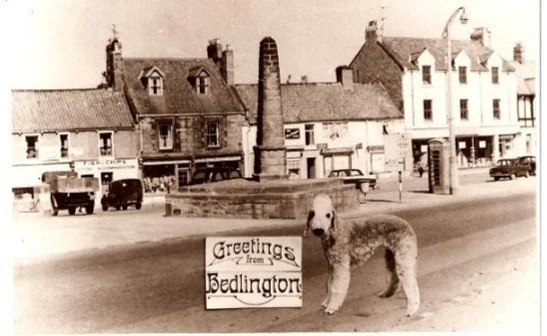
What do you know about Bedlington? Does the name conjure up images of Bedlington Terriers – either the dogs or the footballers?
Or do you know it as a stop on the newly opened railway line to Ashington? Well, anyway, I want to introduce you to its public library in Glebe Road, NE22 6JX.
Previous editions of Curious Squirrel have visited the glitzy new Morpeth library (CS12)and its mature counterpart in Wylam (CS20).
As it happens, they represent examples of different types of library as seen by the NCC (Northumberland County Council) proposal to reshape library services. Morpeth is listed as a ‘hub’ library and Wylam as a ‘secondary’ library, while Bedlington is seen as a ‘primary’ library. Under the new library structure, hubs will be open 45 hours per week and primaries will open for 28 hours, whereas secondaries will open for only 12 hours. Good news for Bedlington, as the new opening hours will be a bit longer than at present.
Everyone knows reading expands worlds, sharpens minds, and fuels creativity. But fewer of us are making time for it. During the National Year of Reading 2026 (https://goallin.org.uk), public libraries like Bedlington will be aiming to reconnect people with their libraries and everything they make possible. The question remains whether 28 hours a week represents adequate provision. Bedlington Library was refurbished after Covid with the addition of communal seating areas, activity tables and a new children’s library area making the space somewhere that members of the community of all ages can enjoy. It’s a warm, welcoming community hub with signposting to resources to support local people. Perhaps it was seen by NCC as the model for their plan to increase access to council services at more library locations across the county. On the other hand, it’s particularly bad timing for NCC to be proposing that other libraries (such as Bedlington Station) will become ‘Community Access Libraries’ operating without council staffing. If not taken on by volunteers they are at risk of closing completely. This reduction in library provision reflects a UK-wide phenomenon. Since 2010 local authority expenditure on public libraries has fallen by almost half in real terms and this means that libraries are closing. Does it surprise you to learn that communities in the most deprived areas are four times more likely to have lost a publicly-funded library since 2016? You don’t have to take my word for it; I got this from the BBC (https://github.com/BBC-Data-Unit/libraries-2024). Is this important? Well, yes because public libraries provide access to materials that many people cannot afford to buy themselves. Bedlington library acts as a social equaliser for access to books and information. Public libraries break down the barriers to literacy and digital opportunity. From free WiFi, public PCs, loaning e-books and audiobooks, and offering assisted digital support, libraries like Bedlington are well placed to support social inclusion. It is no exaggeration to say that public libraries are in crisis as councils across the country cut services in the face of budget constraints. If you care about public libraries, then watch carefully as the NCC library reorganisation unfolds.
John Gowing